This journey begins long before the October 2025 – June 2026 period. For me, the good stuff truly started the day before my interview with the person who would become my mentor, Francesco. On March 3rd, I heard the Skype call coming in, and after answering: a Ciao, Emiliano.
During the interview I felt I did well. My advice for everyone who wants to apply might be very cliché, but be yourselves and above all be honest. Research what the Apple Developer Academy is about and whether its values and what they do align with who you are.
For me, the idea of joining the Academy meant traveling, literally going to the country of my dreams, working with international teams and understanding their different perspectives, but above all creating something real and purposeful that addressed a real need. That’s exactly what I said, and an interview that was supposed to last 5 minutes or less extended to 10. Now I know that was key, since they conduct hundreds of interviews per day, so the fact that he took the time to listen to me and ask more questions was great.
Six months later I was in Naples. But between that call and my first day at the Academy, there was a path nobody prepares you for.
Before the Academy
The interview
I don’t think I have a magic tip for the interview. It’s a matter of luck and attitude. But if I had to point to something: honesty was what made the difference for me. Francesco asked me why I wanted to be at the Academy. I didn’t have a rehearsed answer, and I think that was the best thing. I talked about what genuinely mattered to me: building something real, working with people from different backgrounds than mine, and living in Italy. The conversation flowed and the time doubled. In a process where they conduct hundreds of interviews per day, someone deciding to listen to you longer has to mean something.
I’d recommend to anyone applying: don’t try to sound like the perfect candidate. Research what the Apple Developer Academy is, understand its values and its model, and if they align with what you’re looking for, say it in your own words. That’s enough.
The visa: the challenge before the challenge
If the interview was the exciting part, the visa was the part that almost made me quit. Before even setting foot in Italy, I had to face all the documentation required for the student visa. My most important piece of advice is this: as soon as you’re accepted into the Academy, start preparing everything. Don’t leave it for later.
Complete list of documents for the Italian student visa
- Type D application form
- Two passport-sized photos on photographic paper
- Original passport (held in custody during the process)
- Acceptance letter from the Italian school
- Academic transcript of studies completed in Mexico
- Exchange certificate (if applicable) from your university
- Language certificate for the language in which classes will be taught
- Family member declaration from the person covering expenses
- Valid official ID of the financial sponsor (passport or national ID, both sides)
- Student’s birth certificate (downloadable online version)
- IDs of both parents to confirm identity and relationship (passport or national ID, both sides)
- Employment letter or accountant’s certificate (if self-employed) from the financial sponsor
- Pay stubs or tax authority certificate from the financial sponsor
- Bank statements: 3 statements ordered from most recent according to your visa appointment date. Each statement must show the minimum balance corresponding to your stay in Italy, or at least the most recent one in full and the previous ones at 50% equivalent
- Health insurance or commitment letter with the mandatory statement: “the insurance covers all Schengen area countries” (will not be accepted without this statement)
- Proof of accommodation: can be temporary accommodation for 8 days from your arrival in Italy
- Outbound flight reservation: arriving no more than 8 days before classes start. Only a reservation is recommended, not a mandatory purchase
Notes on proof of financial resources:
- If the financial sponsor is employed: employment letter stating name, position, seniority, and salary + pay stubs from the last 3 months.
- If self-employed: accountant’s letter with tax ID, tax regime, activity, and monthly income + accountant’s professional license + tax authority registration certificate + latest tax declaration. If owner/partner of a company, submit a copy of the articles of incorporation.
- Bank statements must be from payroll, checking, or current accounts. If from investment accounts, submit a letter confirming immediate availability.
- For accommodation and flight tickets, only a reservation is recommended.
The process is long, bureaucratic, and stressful. My passport was held in custody for weeks. I had to coordinate documents from my parents, the bank, the tax authority, and the university, all at the same time. A week after the Academy had already started, I finally got my visa, and two days later I was on the plane to Italy.
Arriving in Naples
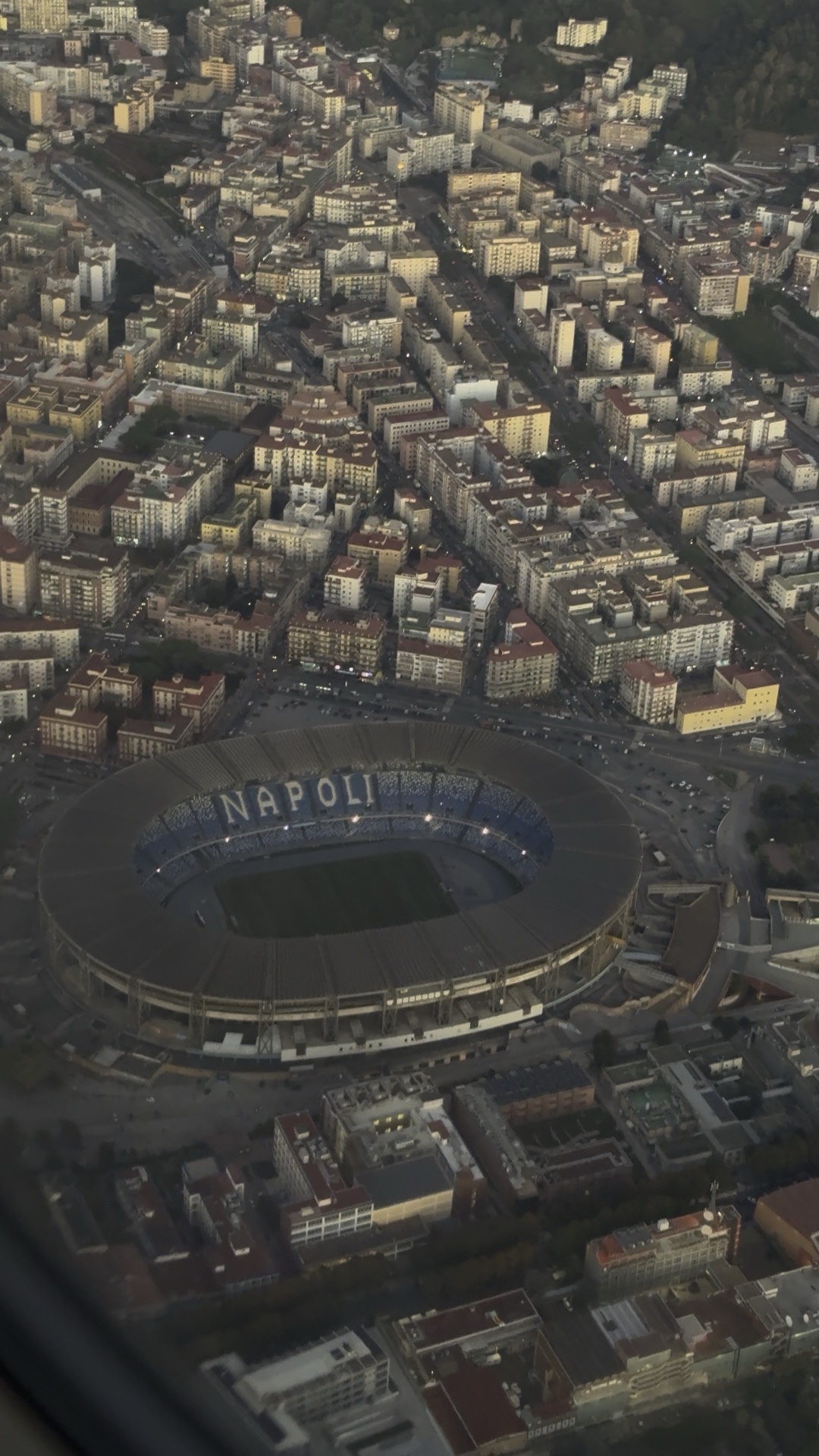
I was lucky to have everything ready from the moment I arrived. I stayed at CX Campus y Hotel, near Garibaldi station. The place has everything a foreigner could need: gym, laundry, shared kitchen, movie room. The tradeoff is the area: Garibaldi isn’t the prettiest neighborhood in Naples, but you’re steps away from the central station, which lets you move around the entire city very quickly.
The main differences from Mexico are, obviously, the language. But the famous chaos of Naples isn’t unrecognizable if you’ve been to Mexico City. That said, drivers here are even more daring. Beyond that, the city’s energy reminded me a lot of home: loud, intense, full of personality, and with a street culture that feels alive at any hour. Naples is not the perfect Italy of postcards, and that’s precisely what makes it unique.
Adapting to daily life in Italian was a gradual process. The first weeks I relied heavily on gestures and Google Translate to shop at the supermarket or order a coffee. Over time I gained confidence, and although my Italian is far from good, I learned that the effort of trying to communicate in the local language opens many doors and draws a couple of smiles.
The Academy is not what I expected
Exactly that.
While I can’t go into detail about what it entails, it’s a program that heavily promotes self-initiative. Here you learn what you want, because it’s what you need, and because otherwise you won’t finish your projects. There’s no professor at the front giving a lecture. There are mentors, there are challenges, there are presentations, and there’s a model that forces you to take responsibility for your own learning.
If like me you come to the Academy with a technical profile, don’t expect low-level classes on Swift technologies, genuinely no. If you come with a designer profile and you’re good, get ready because the offers to join teams will pour in. At least in my generation, I felt there were many technical profiles.
What took me a while to understand was that the Academy doesn’t just teach you technology. I realized that the Academy had been teaching me soft skills all along: communication, leadership, decision-making, how to work with people who think completely differently from you. Those were the skills that transformed me the most.
If you want to read about the technical decisions and my growth as an engineer, I wrote a separate technical reflection.
Working with international teams
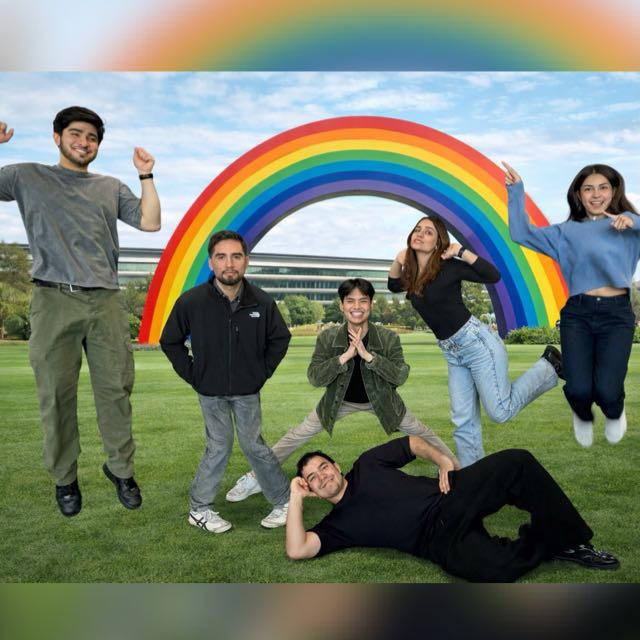
My recommendation for forming teams is to simply talk about what you want to do for that specific project. Not an idea, but the expectation: the type of product, the platform, the scope. That’s already a good starting point.
In general, try to be objective with your feedback. If you don’t like something, don’t just say you don’t like it: explain why. The more factual arguments you have, the less biased your opinion and the more likely it will be taken into account. I’d say the same about requesting reasoning when you receive feedback.
If you team up with your friends, establish very clear rules from the start. Arrival times, meetings per week, how to resolve conflicts, non-negotiables. It might seem boring, strict, or rigid, but being clear from the beginning helps keep problems at a purely professional level and makes it harder for them to escalate to the personal.
Never, ever, ever take things personally. Did you stay up two nights doing work that nobody on your team liked? Don’t waste time arguing or trying to force your idea. Instead, understand in detail why it was rejected; that will help you move faster on the project and generally do better work.
If on the other hand you’re confident in your idea and believe it’s the right vision or direction, don’t impose: build with your team. Genuinely, when you bounce ideas and take the time to really listen to your team, you either make a complete pivot to something entirely different, or you make something even better with the original idea.
Calendar everything
Schedule as much as you can of your challenges: when the project is due, what the milestones are, whether one or more team members will be absent on certain days. That helps you arrive at the final presentation without that extra pressure.
The team I best implemented this with was Arrozzitos, during the development of RoundSplit. There we didn’t just calendar everything, but used the SCRUM methodology to work. The entire team had impressive visibility into what everyone was doing in their respective areas. That structure is what allowed us to reach the final presentation without chaos.
Sharing my culture with my teammates and learning about theirs was one of the most valuable parts of the experience. I met people from Italy, Iran, Brazil, Russia, Vietnam, India, Egypt, Spain, and many more countries. Each one brought a different perspective not just on technology, but on how problems are solved, how ideas are communicated, and what “quality” means. That diversity wasn’t always easy to navigate, but it was always enriching.
My biggest challenge: owning the direction
I think there are many challenges at the Academy, but project ownership takes the crown.
I was so used to being told what to do, how to do it, and what criteria would be used to evaluate me, that switching roles and being the one who sets the bar and also executes was an enormous challenge for me. At university there was always a professor who defined the scope, the deliverables, the evaluation criteria. At the Academy, none of that exists. You define what you’re going to build, how, when, and why. And if you don’t, nobody will do it for you.
The first challenges were really hard because of this. I felt lost, like I didn’t know where to start, like I was doing things wrong with no way to confirm it. But over time I understood that discomfort was precisely the point. The Academy doesn’t give you answers because the real world doesn’t give them to you either. Learning to make decisions without absolute certainty, to define a project’s direction without anyone dictating it, and to live with the trade-off of each choice was probably the most valuable thing I take away.
Especially the later challenges have been like this. In my teams we’ve taken the initiative to organize our time and our work to bring our ideas to life. And each time it feels less like a challenge and more like a natural way of working.
My proudest moment
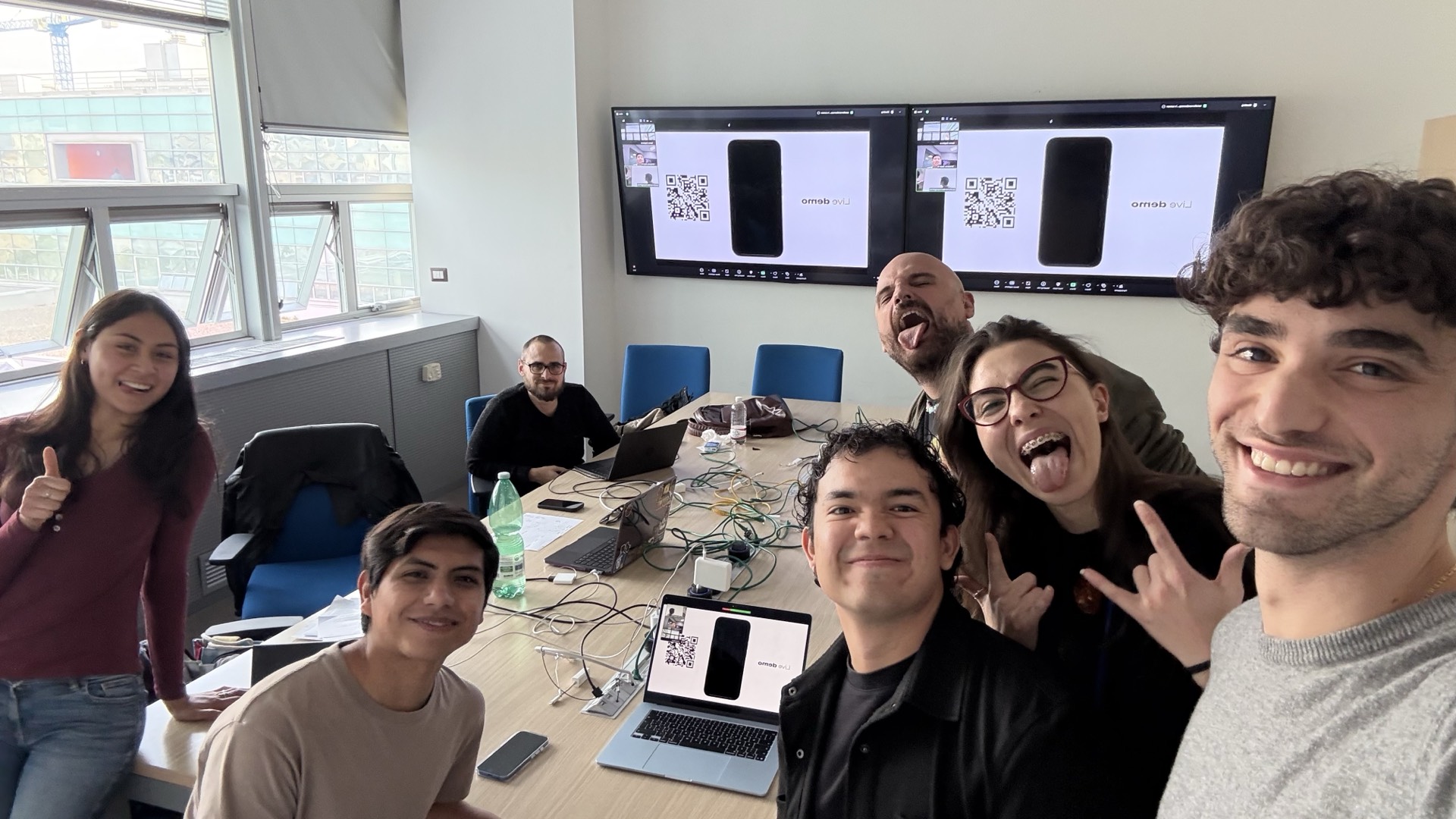
It wasn’t a single moment. It was every final presentation day.
There’s something very particular that happens when you arrive at the presentation day for a challenge and see how what you built with your team makes sense. When you explain the idea, show the product, and see it resonate with other people. They nod, they ask genuine questions, they get excited about what they see. That validation doesn’t come from a grade or a rubric. It comes from real people connecting with something you helped create.
Throughout the Academy, I consistently received very positive feedback on presentations. And every time that happened, I felt the effort, the late nights, the disagreements with the team, and the hours of work had been worth it. Not because someone gave me a perfect score, but because what we built worked and mattered to someone.
That’s the proudest moment: not a specific one, but the pattern. Knowing that you can take an idea, shape it with a team, and at the end of the road what you present truly connects.
What I’d tell future students
Prepare for self-management. The Academy doesn’t work like a traditional school. Nobody is going to tell you what to study or when to deliver. If you’re not ready to take the reins of your own learning, the first months will be tough. Embrace that discomfort, because that’s where you grow the most.
Invest in your team from day one. The relationships you build throughout the academy define the quality of your experience. Don’t just look for profiles that complement your skills; look for people you can have honest conversations with. A team where you can say “I don’t like this, and here’s why” without anyone taking it personally is worth gold.
Learn basic Italian before you arrive. You don’t need to be fluent, but knowing how to order a coffee, ask for directions, and understand a menu changes the experience completely. The effort of speaking in the local language opens doors that English doesn’t open.
Don’t underestimate the visa process. Start preparing your documentation the day you’re accepted. The process is long, involves your parents, the bank, your university, and the embassy. You don’t want to be rushing with this at the last minute.
Build something you care about. It’s easy to fall into doing the “easiest” project or the one that “looks good.” But when you build something that truly matters to you, the extra effort doesn’t feel like sacrifice. And the result is always better.
Ask for feedback even when it hurts. Especially when it hurts. The most uncomfortable corrections were the ones that made me grow the most. Don’t get defensive, listen, understand the why, and use that to do better next time.
How this experience transformed me
When I think about the Emiliano who answered that Skype call in March, I see someone who knew what he wanted but had no idea how to get there. He had technical skills, he had drive, but he was missing something he couldn’t name.
Now I can name it: I was missing the ability to trust my own decisions. To not need someone else to validate every step. To sit in front of a problem with no clear solution and say “I’m going to take this direction, I’m going to own the responsibility, and if I’m wrong, I’ll adjust.” That’s not something you learn in a classroom. You learn it by facing situations where there’s no other option.
But the deepest transformation wasn’t professional. It was learning to live in the present. Before the Academy I had a tendency to live planning: the next semester, the next project, the next step in my career. Naples taught me to be here. To enjoy a meal that extends three hours because the conversation is good. To walk without hurry through a city that doesn’t understand hurry. To value the experience while you’re living it, not just when you tell it later.
That’s what I take with me: not just a broader tech stack or a portfolio with more projects, but a different way of being in the world.
What’s next
I’m going back to Tec de Monterrey to finish my degree with a clarity I didn’t have before. I know I want to build products, I know I want to work with international teams, and I know I want to be somewhere the decisions I make matter.
My mid-term plan is to join a large tech company abroad. Not for the name, but to understand from the inside how organizations that build products at scale work. I want to learn how architecture decisions are made when there are millions of users, how a large engineering team is managed, how technical debt is balanced with development speed. That’s something I can’t learn on my own.
In the long term, I want to build my own thing. After some years of experience, I want to take everything I learned, at the Academy, in the industry, in every team I was part of, and use it to create something of my own. A product, a company, something born from a real need that solves a problem I care about.
The Academy taught me that nobody is going to come tell you what to build. That applies to a nine-week challenge, and it applies to an entire career. The direction and the reins are mine.